






Understanding the IB Curriculum: Structure, Benefits, and Functioning
Jun 17, 2026 Admin
Choosing a curriculum today is not as simple as it used to be. There are boards, international options, different teaching styles, and somewhere in that mix, the IB keeps coming up again and again. Some parents hear about it through friends, some through schools, and others just stumble upon it while researching. But the real question most people are trying to answer is pretty basic: what actually makes it different?
To understand the meaning of the IB Curriculum, you have to look beyond subjects and exams. The IB Curriculum isn’t built just around what students study, but how they learn, how they think, and how they approach the world around them. And that’s where things start to feel a little different from traditional systems.
What Is IB Curriculum? Let’s Keep It Simple
So, first things first, what is the IB Curriculum? The International Baccalaureate is a global education framework that focuses on developing students who can think independently, ask questions, and connect what they learn to real life.
It’s not about memorising chapters and writing them back in exams. It’s more about understanding ideas and using them. The full form of the IB is International Baccalaureate. It was created to offer a uniform, high-quality educational framework for students around the world.
Over time, it’s become one of the most respected international systems, with many schools adopting it, including DPS International and several other well-known IB schools in Gurgaon.
How the IB Curriculum Is Structured
Now, instead of throwing everything at students at once, the IB is divided into stages. Each one is designed for a certain age group, and they sort of build on each other.
Primary Years Programme (PYP)
This is for younger kids. Learning here is very inquiry-driven. Instead of saying “this is the answer,” teachers encourage kids to ask questions and explore. It can feel unstructured at times, but in a productive way.
Middle Years Programme (MYP)
As students grow, things become a bit more structured. Subjects are still connected, but there’s more depth. Students begin to see how topics relate to real-world situations.
Diploma Programme (DP)
This is the stage most people talk about. It’s more intense, yes, but also more rewarding. Students choose subjects and work on assignments, research, and activities outside academics.
Career-related Programme (CP)
A slightly different path for students who want a mix of academic and career-focused learning. When people try to understand the IB Curriculum, this structure is a big part of it. It’s not random. It’s designed to grow with the student.
What Happens Inside an IB Classroom?
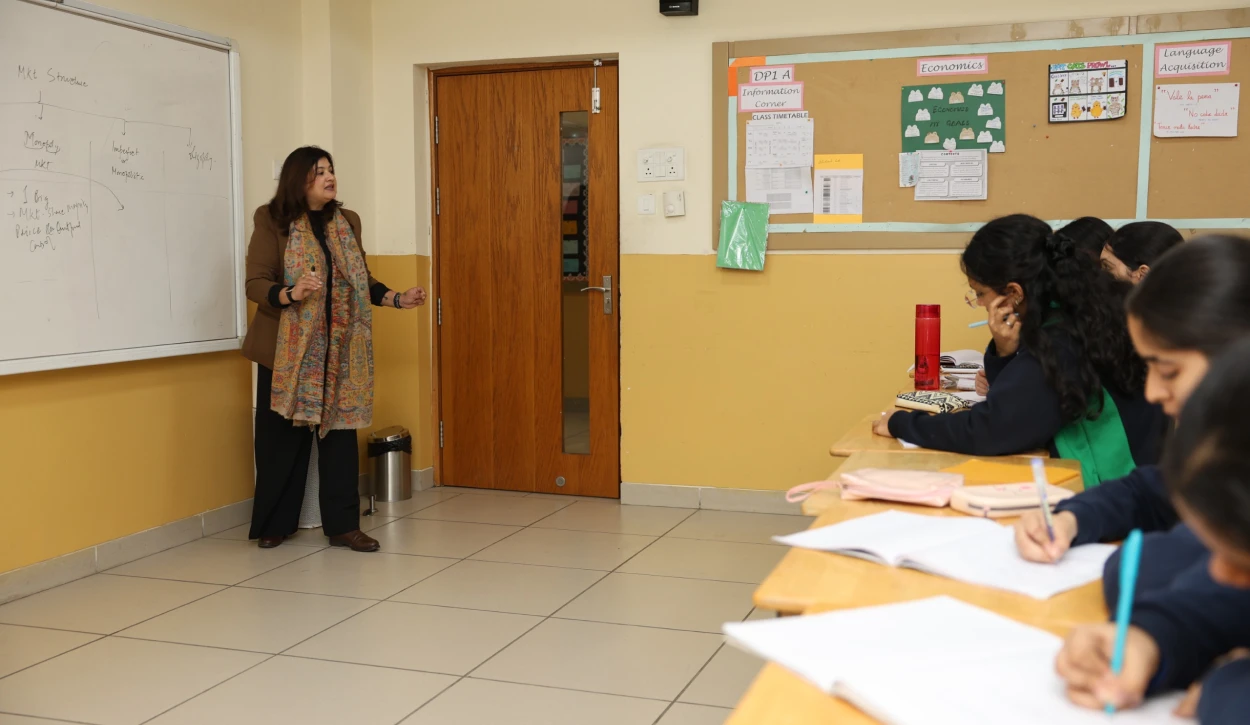
This is where things really start to feel different. An IB classroom doesn’t usually look like a teacher standing and explaining everything while students take notes.
It’s more interactive. Sometimes discussions, sometimes group work, sometimes presentations and yes, at times, slightly chaotic as well. Instead of just reading about a topic, students might:
- Research
- Discuss it with others
- Present their understanding
- Reflect on what they learned
That’s how the IB Curriculum functions in practice. It leans heavily on participation. And honestly, once students get used to it, they don’t just wait for answers anymore. They start looking for them.
Why the IB Feels Different from Other Boards
If you compare it with more traditional systems, the biggest difference is pretty clear. In many boards, the focus is on finishing the syllabus and doing well in exams. In IB, exams are there, but they’re not everything. Students are expected to:
- Think critically
- Ask questions
- Connect ideas
- Work independently
- Express their thoughts clearly
So, instead of just “learning what’s in the book,” they’re learning how to think. And that shift is what draws many parents towards the best IB schools in Gurgaon and similar institutions.
Benefits of IB Curriculum That Actually Matter
Now, coming to the part most parents really care about. The benefits of the IB Curriculum:
- Better Understanding, Not Just Memory: Students don’t just remember things for exams. They understand concepts, which stay with them longer.
- Confidence in Communication: Since students regularly present, discuss and share ideas, they naturally become more confident.
- Global Exposure: The IB encourages students to look at topics from different perspectives. It’s not limited to one way of thinking.
- Preparation for Higher Studies: IB students are generally more comfortable with research, writing and independent work, which helps later.
- Balanced Development: It’s not just academics. Activities, creativity and community engagement are integrated into learning.
- Real-Life Application: Students learn how knowledge applies outside the classroom, not just inside it. These are the reasons why the IB is often seen as more than just a curriculum.
The Role of Teachers in IB Schools
One thing that changes quite a bit in the IB system is the teacher's role. They’re not just there to explain topics. They guide, question and support students through the process.
Sometimes they step back and let students figure things out on their own. It’s not always easy. It requires patience. But it creates a classroom where students feel more involved.
How Students Are Assessed in IB
Assessment in IB is not just about final exams. Students are evaluated through:
- Assignments
- Projects
- Presentations
- Written work
- Internal assessments
This creates a more balanced evaluation system. One bad exam doesn’t define everything. At the same time, it does mean students have to stay consistent. There’s no last-minute shortcut here.
Is IB Difficult? Let’s Be Honest
The IB expects effort. Students need to manage their time, stay organised and keep up with their work. It’s not the kind of system where you can leave everything for the last week.
But here’s the thing: the difficulty is also what builds capability. Students learn how to handle pressure, plan and stay consistent. And those are skills that matter beyond school.
Why More Parents Are Exploring IB Today
There’s definitely been a shift in how people look at education. Earlier, it was mostly about marks. Now, it’s also about skills, confidence and overall development.
That’s why more families are considering the IB. And the growing number of IB schools in Gurugram clearly shows the demand. Parents are looking for something that prepares children not just for exams, but for life. And IB seems to fit that expectation.
Things to Think About Before Choosing IB
That said, IB is not automatically the right fit for everyone. It works best for students who:
- Are curious
- Don’t mind exploring topics deeply
- Are okay with open-ended tasks
- Can manage their time reasonably well
If someone prefers a very structured, step-by-step approach, the adjustment might take time. So, it’s always better to look at the child’s personality, not just the curriculum's reputation.
Also read:Importance of Co-Curricular Activities in Student Life
Final Thoughts
At the end of the day, understanding the IB Curriculum's meaning is really about understanding how learning itself is changing. The IB Curriculum moves away from just memorising and focuses more on thinking, questioning, and applying knowledge.
It’s not the easiest path, but it’s definitely a meaningful one, and while no system is perfect, the IB does offer something valuable: a way of learning that stays useful long after school is over. If that’s what you’re looking for, then it’s worth exploring further.
FAQs
1. What is the IB curriculum, and how is it different from other boards?
The IB curriculum emphasises enquiry-based learning rather than memorisation. In fact, the IB curriculum is simply a global education model that promotes inquiry, critical thinking and the practical application of knowledge. It does not depend solely on exams, unlike the traditional board. Rather, learning becomes more practical and balanced with students being assessed through projects, research and internal assessments.
2. What is the full form of IB and its global relevance?
The full form of the IB is International Baccalaureate. It is known worldwide and followed in most countries. When they are asked what the IB is, they mean a system designed to help develop globally conscious learners. IB students can also find it easier to seek admission in overseas universities and adjust to the international academic setting, owing to its international standard.
3. What are the main benefits of the IB curriculum for students?
The benefits of the IB curriculum go beyond academics. Students acquire strong research, communication and critical thinking skills. They also come to learn how to manage time and solve problems early in life. Because the curriculum incorporates activities and real-life applications, it facilitates overall development rather than focusing on marks. This gives students a lot of confidence and they are now ready to face future challenges.
4. Is the IB curriculum suitable for every student?
Although the IB curriculum emphasises exploration and independent research, it may not be immediately appropriate for all students. It is most effective with those learners who are curious, open to discussion and comfortable with self-directed assignments. Students accustomed to a rigid structure may take a little time to adjust, but with the right support, most can adapt well.
5. Why are IB schools gaining popularity in India?
IB schools in Gurgaon and other cities are becoming increasingly popular with many parents seeking a more holistic education for their children. The IB is aimed at such skills as critical thinking and communication, which are critical in the modern world. Its international fame and the moderate attitude to school and personal growth make it a good choice for the contemporary family.