







Leadership Begins with Emotional Intelligence
Jul 22, 2026 Admin
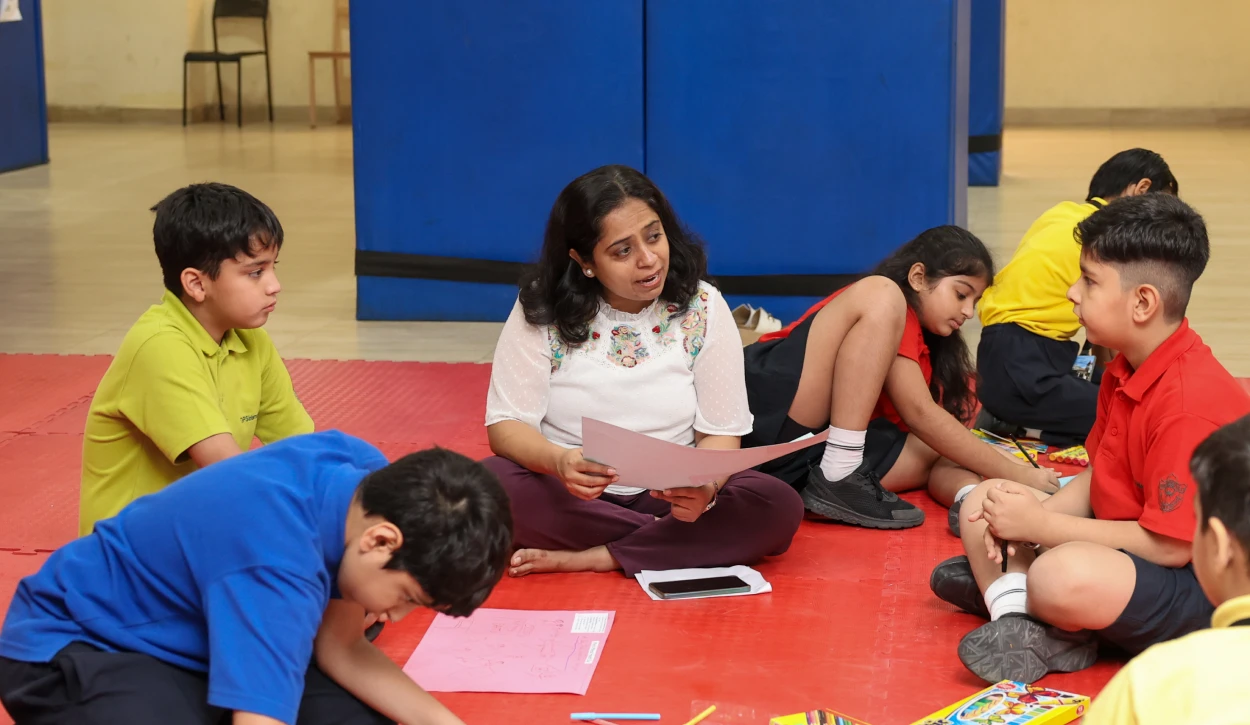
Your child loses the final round of a board game, and what began as a fun evening suddenly ends in tears. A misunderstanding with a friend at school lingers long after the final bell, following them home and settling into the silence around the dinner table.
In moments like these, parents aren't looking for textbook definitions of resilience or emotional intelligence. They simply wonder: Will my child learn how to navigate setbacks, emotions and relationships? And will their school play a meaningful role in helping them grow through these moments?
If you ask what is emotional intelligence, the answer psychologists give is the capacity to recognise, understand and manage your own feelings, and to read and respond to other people’s. Salovey and Mayer named it; Daniel Goleman popularised it as four domains of self-awareness, self-management, social awareness and relationship management. That is the textbook answer. The one underneath a parent’s worry is more practical. Can a school build this on purpose, day after day, or is it left to chance? In an IB classroom, building it is part of the design.
How does a school actually build emotional intelligence in a child?
A school builds emotional intelligence by teaching the skills openly, naming feelings, calming the body, listening, taking turns, working through disagreements and then modelling those same skills in how every lesson runs. Taught like this, throughout the ordinary school week, they grow into daily habits the child can use anywhere.
The first is explicit teaching. A young child is shown how to name what they feel before they are asked to manage it, the way they are shown how to hold a pencil. The second is modelling. When a teacher pauses a noisy classroom and talks through her next steps with calm and intention, she is modelling self-regulation in real time. Children learn as much from that moment as they do from any lesson.
This is also where a once-a-week wellbeing assembly tends to fall short. A single slot can introduce the idea. The habit only forms when the same skill is asked for again on Tuesday in maths, on Wednesday in a group task, or on Friday when two friends fall out. Everything below is about where, in an IB education, repeated asking is built in.
Where emotional intelligence lives in an IB education
At an IB school, this isn't left to chance. A child's social and emotional development is woven into the very foundation of the IB framework, ensuring these skills are nurtured every day, not just during challenging moments.
The first is the IB learner profile, the set of ten attributes every IB programme works to develop over the years a child is in school. Several of them are emotional intelligence under another name:
- Balanced. Recognising that a child's intellectual, physical and emotional well-being are equally essential for them to truly thrive.
- Caring. Showing empathy and respect, and acting on them.
- Reflective. Coming to understand one’s own strengths, limits and what sets one off.
- Principled. Acting with fairness and owning the consequences of one’s choices.
- Communicators. Communicating with clarity while valuing and understanding different perspectives.
The second is the Approaches to Learning (ATL), the IB's framework for developing transferable skills that students practise across every subject and experience. Among its five skill categories, two focus directly on emotional and social growth. Self-management skills help children develop emotional regulation, mindfulness, resilience and the ability to manage their thoughts, emotions and actions. Social skills nurture collaboration, relationship-building, conflict resolution, empathy and leadership qualities that prepare students not just for academic success, but for life beyond the classroom.
Read those two lists together, and the point is plain. At an IB school, empathy, emotional resilience, collaboration and leadership are not taught as separate life skills. They are embedded into everyday learning, guiding every lesson a teacher designs.
From self-regulation to leadership
Leadership is often seen as a title, a badge, or a position of responsibility. At an IB school, it is viewed very differently. It begins with everyday actions—working well with others, resolving conflicts respectfully and taking responsibility for one's own behaviour.
True leadership grows from self-management. When children learn to understand and regulate their emotions, they are better equipped to support others, make thoughtful decisions and contribute positively to a team. In the IB framework, leadership isn't something a child is given; it's something they develop, one experience at a time.
You can watch it happen in an ordinary project. Picture four MYP students a fortnight into a build. One girl in the group realises that a quieter teammate has gone silent and stopped contributing. She does not announce anything. She turns and asks him what he makes of the next step, then waits for the answer. The group steadies, and the work moves on. The IB files that kind of noticing under social skills, alongside collaboration and conflict resolution, and treats it as something a child gets better at through practice.
Why emotional intelligence matters for students
Parents often ask why emotional intelligence matters when university admissions are largely based on academic performance. The answer is simple: emotional intelligence and academic success often go hand in hand. Children who handle their feelings well also tend to do better at school. Research consistently shows that emotional intelligence delivers two significant benefits for students: stronger academic performance and enhanced wellbeing.
For learning, the Education Endowment Foundation, reviewing the available evidence, found that effective social and emotional learning is associated with around four additional months of academic progress over a year. A child who can settle their own attention, get over a setback and work in a group is a child who is ready to learn. Settle the child first, and the school work gets easier.
On wellbeing, the case is just as practical and closer to home. Depression is affecting a significant number of Indian teenagers, highlighting the need for greater awareness and emotional support. Several Indian states have answered with a happiness curriculum, putting lessons in feelings and mindfulness on the timetable. A large trial of that approach is under way through J-PAL South Asia. Whatever the trial concludes about marks, the everyday point holds. A child who can name what they feel and ask for help when it gets too much, has a way to handle the pressure of the teenage years.
What this looks like on an ordinary day with us
At DPS International, an authorised IB School in Gurgaon, this is not a separate lesson on the timetable. It lives inside how the day already runs. When a disagreement flares in a group, the first move is rarely for an adult to settle it. A teacher will more often slow the moment down, ask each child to say what they wanted and what they heard, and let them find the repair themselves, with the conflict-resolution language they have been taught since the early years. The lesson starts again a few minutes later. The children have just practised saying what they wanted, hearing what the other wanted, and putting it right themselves.
So here is one such moment from our corridors, in the words of someone who works in them.
On any given morning, it's the little moments that reveal the biggest lessons. A child may arrive upset after an argument at home, but within minutes, they find the strength to regulate their emotions, reconnect with their peers and re-engage in learning. That transformation isn't the result of a single lesson—it's built through consistent guidance and everyday experiences over time.
A family comparing IB schools in Gurgaon learns more from an hour in a live classroom than from a brochure. Emotional intelligence shows in the small things. A disagreement that flares up. A child who has gone quiet. The first move a teacher makes after a group task falls apart.
Also Read: What is Social Emotional Learning (SEL): Why Does It Matter?See it where it actually shows
The emotional intelligence and the leadership a parent hopes for are written into how the IB teaches, through the learner profile and the approaches to learning. They show up in small, unscripted moments. A frustration steadied. A quiet teammate drawn back in. An argument settled before it spoils an afternoon.
Those moments happen at the edges of a lesson. In how children speak to each other when a task has gone wrong and no adult has stepped in. At the group table just after a plan falls apart. In the corridor at the end of a lesson. Come and spend an ordinary morning in a live classroom and watch how those are handled here. The answer to the question you actually came with is usually somewhere in there.
Frequently asked questions
Q. What is emotional intelligence?
It is the ability to recognise, understand and manage your own feelings, and to read and respond well to other people’s. Psychologists Peter Salovey and John Mayer coined the term. Daniel Goleman grouped it into four parts, namely self-awareness, self-management, social awareness and relationship management. In a child it shows up as the everyday business of handling a setback and getting along with others.
Q. Why is emotional intelligence important for students?
Because the two tend to go together. A child who can settle their attention and get over a setback is ready to learn. That is why social and emotional learning is linked to real gains in school work. It also gives a young person a way to handle the pressure of being a teenager.
Q. How can parents help improve a child’s emotional intelligence at home?
Most of how to improve emotional intelligence at home is undramatic. Talk openly about emotions, your own included, so children learn the words to express what they feel. Allow children to sit with small disappointments before stepping in, so they learn that uncomfortable emotions pass with time. When you lose your temper, let your child see you make it right. An honest apology teaches more about accountability than any lecture ever could. You do not need formal emotional intelligence activities for students at the kitchen table; the daily moments are the practice.
Q. What does emotional intelligence have to do with leadership?
More than the word usually suggests. The leadership that lasts is mostly about reading a group, staying steady when things go wrong, and bringing people with you. All of it grows out of managing yourself first. The IB recognises leadership as a skill built through years of working with others, where collaboration and empathy matter long before formal leadership roles appear.