







What Is Behavioral Learning Theory & Its Importance in Education?
Feb 24, 2026 Admin
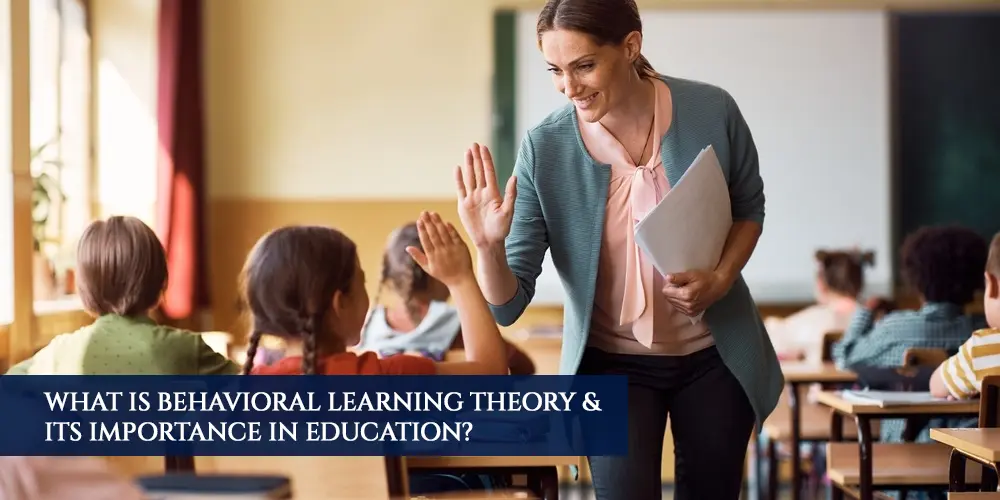
If you go back to your early school years, you might remember moments when a teacher praised you for a correct answer or when the entire class got a few extra minutes of break for behaving well. Those small things weren’t random, they were deliberate tools used to shape behaviour. Long before we talked about modern teaching strategies or digital classrooms, teachers were already applying the principles of something we now formally call behavioral learning theory.
To put it simply, students learn a great deal from what they experience repeatedly. Whether it’s a reward for completing homework or gentle consequences for disrupting a lesson, behaviour slowly adapts based on outcomes. And that is pretty much the core of this theory.
But before going deeper, let’s address the first big question: what is behavioral learning theory? At its essence, it focuses on how external actions, responses, rewards, and reinforcements shape learning and student behaviour. The theory says that learning doesn’t just happen in the mind, it happens through doing, repeating, experiencing, and receiving feedback.
In schools today, especially in progressive learning environments like IB schools in Gurgaon, behaviour-based strategies play a bigger role than we notice. They help teachers guide students toward positive habits, better classroom engagement, and stronger academic discipline. And the best part? When applied well, behaviorist methods bring clarity and predictability into learning, something every child benefits from. Let’s walk through the idea, its relevance, and how educators can use it meaningfully.
Understanding the Basics: What Exactly Is Behavioral Learning Theory?
Before diving into classroom applications, it’s important to really understand what behavioural learning theory is and why it has influenced teaching for decades.
This theory was shaped by psychologists like B. F. Skinner, Ivan Pavlov, and John Watson. According to them, human behaviour is learned through interactions with the environment. If an action is followed by a positive result, it is more likely to happen again. If it brings discomfort, the behaviour reduces.
It sounds simple, but this idea opened a completely new way of understanding student learning. Instead of assuming that students behave based on internal thoughts or emotions alone, behavioural theorists argued that actions can be shaped through repeated patterns.
A student who gets praised every time they submit neat work starts to develop pride in neatness. A student who experiences a consequence for talking in class learns that silence earns better outcomes. Behaviour becomes structured, reliable, and easier to guide.
So, when educators ask, what is the theory of behaviorism, this is what they’re referring to. Learning is the product of stimulus, response, and reinforcement.
What Is Behaviorism in Education? Why Does It Still Matter?
Even in a world full of digital tools, personalised learning, and inquiry-driven classrooms, teachers still look for practical ways to guide behaviour. That’s where “what is behaviorism in education” becomes relevant.
In the classroom, behaviorism means using reinforcement, repetition, modelling, and feedback to help students learn both academic and personal skills. Instead of abstract explanations, behaviour-based learning focuses on visible actions: raising hands, completing tasks, staying organised, participating, or using polite language.
Why does it still matter?
Because behaviour shapes learning. A child who listens well learns better. A child who stays consistent with homework develops discipline. A child who feels rewarded for participation builds confidence. And each of these behaviors contributes to long-term success.
In many learning environments, from traditional classrooms to high-performing IB schools in Gurgaon, educators use behaviorist strategies to build routines. Classes flow more smoothly, students feel secure, and disruptive behaviour reduces naturally.
It may be an old theory, but it continues to work because the foundation of human behaviour hasn’t changed.
How Behavioural Learning Theory Works Inside a Classroom?
Now that we understand the idea, let’s get into how to apply behaviourism in the classroom in a way that feels natural and effective.
Behavioural theory enters a classroom through simple, everyday practices like:
Clear expectations
Children behave better when rules make sense. Teachers who spell out what behaviour is expected set a predictable environment. Whether it’s raising hands or walking quietly in the hallway, clarity helps.
Repetition and practise
Students learn best through doing things again and again. Reading, writing, problem-solving, teamwork, everything strengthens through repetition. Behavioural learning theory encourages this consistency.
Positive reinforcement
This is the heart of the theory. Praising good behaviour, awarding house points, offering encouraging words, or giving small privileges reinforces desirable actions. Students repeat what earns positive outcomes.
Corrective feedback
Instead of punishment, behaviourism encourages clear feedback. Teachers guide students by showing what went wrong and how to improve. When done politely, it builds responsibility instead of fear.
Modelling behaviour
Students observe everything. A calm teacher encourages calmness. A respectful teacher teaches respect. Behaviourism makes modelling an intentional strategy.
Structured routines
Timetables, transitions, and rituals (like morning circles) help students feel grounded. Predictability reduces stress and supports learning.
These everyday methods are exactly how teachers apply behaviourism today without even calling it by name.
Why Behavioural Learning Still Works in Modern Classrooms?
Some people think behaviourism is outdated because today’s classrooms focus more on inquiry, creativity, and emotional expression. But here’s the truth: behavioural strategies act as the foundation on which everything else stands.
Without positive routines, learning gets messy. Without reinforcement, habits don’t stick. Without clear expectations, students drift.
Behavioural learning theory brings structure, and structure brings stability.
Here’s why it still works:
1. It supports young learners
Children need repetition and reinforcement. Behaviourism gives them the consistency they crave.
2. It strengthens classroom management
Teachers can guide behaviour with fewer conflicts when routines are predictable.
3. It helps build discipline
Discipline is not punishment. It's consistent. Behaviourism teaches students to reflect on their actions through outcomes.
4. It improves academic performance
Students who behave well learn better. Reinforced study habits improve reading, writing, and problem-solving skills.
5. It complements modern approaches
Inquiry-based learning builds creativity. Behaviourism builds discipline. Together, they complete the child.
Educational research often shows that blended strategies have the most powerful results.
Real Examples of Behaviorism Applied in Schools
To make the idea more relatable, let’s look at what behaviourism looks like in a real classroom setting without relying heavily on examples.
A teacher might track participation using small stickers or points. Students listen more actively because they want to earn recognition. Another classroom may have a routine where students remain silent for the first few minutes of class to settle down. Over time, this silence becomes a habit. Even something as simple as a teacher saying, “Thank you for raising your hand” reinforces that behaviour, making students repeat it.
Behaviourism shows up in the everyday rhythm of school life. It’s present in transitions, assignment submissions, group behaviours, and even playground interactions.
Benefits of Behavioral Learning Theory for Students
Behaviourist practices benefit students not just academically but emotionally and socially as well.
1. Better self-control
Students learn how to pause, think, and respond appropriately.
2. Improved focus
Clear expectations reduce distractions. Students know what to do and how to do it.
3. Increased motivation
Positive reinforcement builds confidence and pushes students to do better.
4. Reduced anxiety
Predictable routines make learning feel safe, especially for younger children.
5. Stronger social behaviour
Students learn respect, cooperation, and patience over time.
6. Long-term discipline
Behavioural training shapes habits that remain useful well into adulthood.
Why Educators Still Value Behaviourism Today?
Many modern teaching styles exist: project-based learning, experiential education, inquiry-driven classrooms, to name a few. Yet teachers continue to lean on behaviourism because it works well behind the scenes.
It helps teachers manage diverse classrooms. It gives young learners a clear direction. It reduces negative behaviours. Most importantly, it supports the emotional wellbeing of students by giving them a predictable space to grow.
In high-performing learning environments, including several respected IB schools in Gurgaon, the use of behaviourist methods helps maintain discipline without compromising creativity or inquiry.
Challenges of Behavioural Learning Theory
To be fair, behaviourism is not perfect. Critics argue that it may ignore deeper emotions or creativity if overused. That’s why balance is key.
Challenges include:
- risk of over-rewarding
- ignoring intrinsic motivation
- focusing too much on external outcomes
- creating dependency on praise
These challenges are real, but they can be avoided when teachers mix behaviourism with emotional guidance, inquiry-based learning, and reflection practices.
Also read: Enhancing Focus and Concentration in Children
Final Thoughts: Why Behaviourism Still Matters
To wrap it up, the most important takeaway is simple. Behavioural learning theory isn’t just about rewards or rules. It’s about shaping habits that help students grow. Understanding what is behavioural learning theory or what is the theory of behaviourism reminds us that learning is deeply connected to behaviour. And knowing what behaviourism is in education helps teachers create routines that support learning, not restrict it.
Behaviourism remains relevant because it helps students develop consistency, respect, patience, and discipline. And these qualities matter in every aspect of life, not just academics.
Educators still use it because it works. Students benefit from it because it gives them structure. Parents appreciate it because it builds responsibility. And schools value it because it strengthens the learning environment.
By applying behaviourist techniques with sensitivity and balance, teachers can create classrooms where learning feels predictable, supportive, and empowering. And in today’s fast-changing educational world, that kind of stability is priceless.